Several serious risks could hit small businesses in 2027, and the greater danger is that they arrive together. Here are five to plan for now.
1. Cyber attacks hit Main Street. AI tools help criminals find and exploit weaknesses faster than ever, and small businesses are easy targets. Keep your website and software patched, use a password manager with unique passwords, and protect email and banking with an authenticator app.
2. A stock market correction. Heavy borrowing to fund the AI boom has left markets vulnerable to a sharp drop. Check how concentrated your retirement accounts are, and build an operating cash reserve.
3. Rapid change from AI. AI is improving quickly and may change how customers buy your services. Test AI on one routine task this quarter so competitors do not pull ahead.
4. Higher food, fuel and energy costs. Conflict abroad could push oil prices sharply higher. Add price adjustment language to contracts, and keep accurate vehicle records.
5. Sudden policy shifts. Federal tariffs, tax rules, and immigrant worker regulations can change with little notice. Identify government policies that are important to your business. Budget for a best case and a worst case, and take available deductions now.
The bottom line: A business that prepares for one of these risks is better prepared for all of them. Year-end is the time to act, because many tax-related moves should be made by December 31 for faster benefits. Contact me for a planning conversation before the year closes.
News
-
Five Small Business Risks in the Year Ahead
-

Money Left on the Table: A Cumberland County Guide
The national numbers and our kitchen tables
On November 2, 2026, New Jersey closes the filing window for this year’s property tax relief, and many Cumberland County seniors have not filed. That deadline is the most urgent item in this guide, but it is not the only money people here are leaving behind.
By the usual national measures, the economy looks strong. Employment is high, the stock market is at record levels, and home values are still high. Yet consumer sentiment sits near record lows, and the University of Michigan reported this month that confidence fell most sharply among lower-income households and people with small investment portfolios. Those are the households that make up much of Cumberland County.
No article can lower the price of groceries or electricity. What I can do, after four decades of assisting folks in South Jersey, is point to the credits, rebates, and deductions that our neighbors qualify for and routinely miss. Most of them require nothing more than filing a form. This guide covers what is available right now, who qualifies, and where to get free help.
Property tax relief: file by November 2
If you are 65 or older, or you receive Social Security disability, the state will not file for you. You must submit Form PAS-1 by November 2, 2026, or you lose ANCHOR, Senior Freeze, and Stay NJ for the year in one stroke. Most people under 65 were filed automatically and received a confirmation letter in August. If you are under 65 and never got that letter, you can still file Form ANC-1 by the same date.
The PAS-1 is one application for three programs. You file it once, and the state decides which benefits you qualify for.
Program Who qualifies 2025 benefit ANCHOR (homeowners) Owned and lived in the home on October 1, 2025; income up to $250,000 $1,500 under 65 or $1,750 age 65+ (income to $150,000); $1,000 or $1,250 (income $150,001 to $250,000) ANCHOR (renters) Rented your main home on October 1, 2025; income up to $150,000 $450 under 65; $700 age 65+ Senior Freeze Homeowners 65+ or on Social Security disability, under the income limit Reimburses increases in your property tax over your base year Stay NJ Homeowners 65+ who owned and lived in the home all of 2025; income $200,000 or less Up to $6,500 (income to $100,000); $5,000 ($100,000 to $150,000); $4,000 ($150,000 to $200,000) The income limit for Stay NJ dropped from $500,000 to $200,000 in this year’s state budget, so some people who received it last year will not this year. Also, renters and mobile home owners on leased lots do not qualify for Stay NJ, but they do qualify for ANCHOR.
To file, gather your block and lot numbers and tax amounts from your 2024 and 2025 property tax bills, and your gross income from line 29 of your New Jersey return for both years. File online at propertytaxrelief.nj.gov or call the state hotline at 1-888-238-1233. Keep your confirmation number as proof of filing.
Credits working families miss
The most common mistake I see is a low-income family that does not file a return because it owes no tax. These credits are refundable, which means the state and the IRS send you money even when you owe nothing, but only if you file.
Credit Who qualifies 2025 maximum Federal Earned Income Tax Credit Workers with earned income under the federal limits $649 with no children; $4,328 with one child; $7,152 with two; $8,046 with three or more New Jersey Earned Income Tax Credit Anyone who qualifies for the federal credit and files an NJ-1040 40% of the federal credit: $260 with no children; $1,731 with one child New Jersey Child Tax Credit Taxable income of $80,000 or less, with a child age 5 or younger Up to $1,000 per child; the full amount goes to households with taxable income of $30,000 or less Federal Child Tax Credit Children under 17 with a valid Social Security number Up to $2,200 per child The state budget passed in June raises the New Jersey Child Tax Credit to as much as $1,250 per child for 2026 returns.
If you skipped a return in a recent year, you have not necessarily lost the money. You can generally still file for 2023, 2024, and 2025 and collect these credits. Families who only want the New Jersey Child Tax Credit and are not otherwise required to file can claim it through the state’s free SimpleFile option.
New federal deductions for 2025 through 2028
The federal tax law passed in July 2025 created four new deductions that matter in a county full of food processing, farm, health care, and restaurant workers. They are claimed on a new IRS form, Schedule 1-A, and you can take them whether or not you itemize.
Deduction Limit Key requirements Overtime Up to $12,500, or $25,000 on a joint return Only the extra half of time-and-a-half counts; married couples must file jointly Tips Up to $25,000 Tips must be reported and earned in an occupation where tipping is customary; phases out above $150,000 of income Seniors An extra $6,000 per person age 65 or older Phases out as income rises above $75,000, or $150,000 on a joint return Car loan interest Up to $10,000 of interest New vehicle assembled in the United States, bought after 2024 with a loan secured by the vehicle; the VIN goes on the return A deduction is worth less than a credit. It lowers your taxable income, so a $5,000 overtime deduction saves a worker in the 12% bracket about $600. That is still real money, and many people missed these on their 2025 returns because the forms were new. If you worked overtime, earned tips, turned 65, or financed a new car last year and do not see Schedule 1-A in your return, it is worth an amended return.
All four of these deductions are scheduled to expire after 2028.
Put the money in your paycheck instead of waiting for April
A large refund feels good, but it means you lent the government your money all year without interest. A family stretched by grocery and utility bills is usually better served by a slightly larger paycheck every week. If you regularly earn overtime or tips, the new federal deductions mean your employer is probably still withholding too much.
- Pull your most recent pay stub and last year’s federal return.
- Open the free IRS Tax Withholding Estimator and enter your pay, expected overtime or tips, and any credits you expect to claim.
- Print the new Form W-4 the estimator produces, which will show your expected deductions and credits.
- Give the new W-4 to your employer’s payroll office.
- Check your next two pay stubs to confirm the federal withholding changed.
- Repeat the check if you change jobs, get married, have a child, or your overtime changes significantly.
Be careful not to overcorrect. Withholding too little can leave you with a bill and a penalty. Aim to owe or receive a small amount, not zero.
Where to get free help
You do not need to pay anyone to claim most of what is in this guide.
Need Where to go Contact PAS-1 help for seniors and people with disabilities Cumberland County Office on Aging and Disabled, Bridgeton (856) 453-2220 Questions about ANCHOR, Senior Freeze, or Stay NJ NJ Division of Taxation property tax relief hotline, weekdays 8:30 a.m. to 4:30 p.m. 1-888-238-1233 Free return preparation for low and moderate income households, February through April Volunteer Income Tax Assistance (VITA) sites, listed by county at NJ 211 1-800-906-9887 Free return preparation focused on seniors AARP Foundation Tax-Aide 1-888-687-2277 Dates to remember
- November 2, 2026: last day to file the PAS-1 or ANC-1 for ANCHOR, Senior Freeze, and Stay NJ.
- February 2027: the 2025 Stay NJ benefit begins paying in quarterly installments.
- April 15, 2027: 2026 federal and New Jersey returns are due, and with them the larger New Jersey Child Tax Credit.
A closing word
Whatever you think of the national economy, the money in this guide is already set aside by law for people who qualify. Too much of it goes unclaimed in Cumberland County every year because no one told the people who earned it. If you know a neighbor over 65 who has not filed the PAS-1, the most useful thing you can do this week is sit down with them and help them file.
Sources
- NJ Division of Taxation: Stay NJ
- NJ Division of Taxation: ANCHOR
- LegalClarity: How to apply for NJ ANCHOR
- NJ Division of Taxation: Earned Income Tax Credit
- NJ Division of Taxation: Income Tax Changes for Tax Year 2025
- IRS: Schedule 1-A for new deductions
- Cumberland County Office on Aging: Summary of Services
- NJ Division of Taxation: Free Tax Preparation Services
- University of Michigan sentiment, via RISMedia
-
Scams Are Costing Our Neighbors More Than Ever
Within my own client base, the money lost to scams each year reaches tens of thousands of dollars, and the problem is getting worse.
The pace and sophistication of these online scams is accelerating rapidly with the incorporation of AI tools. It is more difficult than we could have imagined to separate a scam attempt from reality.
Worldwide, the Global Anti-Scam Alliance estimates that $442 billion was lost to online scams in the past year. That figure rivals the estimated value of the entire global illegal drug trade, and it does not include the cost of prevention or investigation. AI is accelerating the problem by making fake voices, videos, and messages convincing at almost no cost.
My role is to get clients to pause before acting on anything unusual, even when every emotion says to act fast. Once a second person trained to spot fraud starts asking questions, most scams unravel. Scams prey on our powerful emotional and naturally responsive patterns of thinking. Former federal prosecutor Preet Bharara has observed that some victims never fully accept they were scammed, even later while the case is being prosecuted.
When something feels urgent, follow these steps:
- Stop. Do not pay, click, or reply. The most important first step is to interrupt your thinking that is telling you to respond.
- Hang up or close the message. Contact the person or company directly using a number you already know.
- Call someone experienced in fraud before moving any money. My clients can call me.
- Wait. Treat urgency itself as the warning sign. Legitimate requests can wait one day.
Urgent bills, remarkable investment opportunities, and relatives who suddenly need money are the most common triggers. Go against your instincts and get a second person’s input.
-
Business Formation Services
Over half of my work in recent years has come from fixing problems that started with misinformation, misconceptions, and simple errors. Many of those problems trace back to the very first decisions a business owner made, often through a $99 online formation service that filed the paperwork and offered no advice about whether it was the right paperwork. The savings on that first day frequently cost thousands of dollars to correct later.
For that reason, I am expanded the business formation services that I offer, in the hope of helping more people start on the right path. The intent is to prvide a simple, all-inclusive, turnkey service for starting a new business.
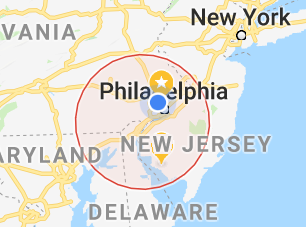
These services include review of the basic business plan, choosing a name, choice of entity, formation, operating plan, control procedures, state registration, bookkeeping setup, and preparation of a banking package. Sometimes local business registration is also required, for example, in Philadelphia or Wilmington.
It is worth noting that some of these services are classified as legal services. I am not an attorney. I can provide specific legal services as recognized by the Opinion 47 of the Supreme Court’s Committee on the Unauthorized Practice of Law and itemized in our engagement agreement. You should consult an attorney for all legal matters.
I charge much more than the AI-powered services, usually $1,500, but the personal professional service saves time and money in the long run.
Will it make a noticeable difference? I intend to find out by tracking whether the businesses I help form arrive at their first tax season with fewer problems than those that started elsewhere. I will share what I learn.
-

How Do I Bridge the Local Small Business Language Barrier?
Requests for small business startup support from Hispanic neighbors are increasing, and I expect that to accelerate. Likewise, requests for more complex tax problem resolution are increasingly coming from individual Spanish-speaking folks as well. Hispanic students are the largest group in our local public school systems. My estimate from the most recent district reports to NJDOE for the year ended 2024 puts countywide public school enrollment at roughly 55% Hispanic, against a county population figure closer to 35%. That gap is the forecast. Those students will be the business owners and employees I serve over the next fifteen years.
A majority of the workers in the industries I serve, which are farming, contracting, and fishing, also appear to be Hispanic based on surnames in the payroll records I process. That is an impression rather than a count. Language matters most in that setting, because payroll and benefits communication has to reach every employee, not just the owner who hired me.
I think the local conversation goes wrong by treating this as one problem. Many Hispanic families here are long established, fully bilingual, and English dominant. When I fail to connect with a business owner in that group, language is rarely the reason. The reasons are that nobody in the family has paid for advisory work before, that the trades run on cash and the records are imperfect, and that my fee is a real number against a thin first year. Those are trust and pricing problems. Translating my engagement letter does not touch them. For more recent arrivals, the language barrier is genuine, and translation is necessary but nowhere near sufficient.The standard answer is to bring bilingual young people into the profession. I believe in it and yet I cannot fund it. My estimate from the last interns I hired is roughly two years of negative cash flow, and I rarely keep an associate longer than that. I would love to see tighter integration of education and internships, but the current system seems ineffective for my industry. A few years ago I tried working through the NJCPA to find an internship for a student interested in working with a CPA firm and the closest opportunity was an hour’s drive north of Cumberland County. The NJCPA is heavily involved in recruiting for the accounting industry, but internship opportunities are lacking in this region.
My current workaround is communicating through a client’s family member, meeting face to face to pick up non-verbal communication, and speaking slowly. This works, but it carries a risk. Family interpreters soften hard news, and some folks lack the vocabulary for a full understanding of the legal issues. The exposure from that gap stays with me.
Many suggest leaning in to translation technology. I am skeptical based on limited past experience, and on the fact that the legal or technical words I need to get right in tax and benefits work may not have reliable equivalents in another language. I will test some new tools this month rather than argue about them, and will welcome discussion on what I find with neighbors and peers.
Over the longer term, I hope to pursue a co-engagement with an established bilingual bookkeeper, where that person controls intake communication and I handle the technical work.
-

How to Pay the Estate Attorney and CPA
In my article “Navigating the Six Phases of Settling a New Jersey Estate“, I suggest addressing the question of finding a CPA and attorney first before tackling other estate executor duties. Not all estates need both, and some might not need either. But the practical reality is that the executors of most average estates would logically prefer to have professional help. It is easier, safer, and more effective to hire help than to try to learn to do it yourself.
I suggest a simple rule of thumb that when there is known risk of conflict between heirs or creditors, use an attorney. When the concepts and terms described in the 6 phases / 20 steps are confusing, use a CPA. Worth adding here than all rules of thumb are more useful in communicating a concept and less useful in application to a specific case. That leads to the next question: how to pay the attorney and CPA.
First, a beneficiary question
Almost everything below assumes the executor is also a beneficiary. That describes most family estates, where a son, daughter, or surviving spouse is named to serve. If the executor inherits nothing, there is no trade to make, and the executor’s commission is the only compensation available. Read the rest of this article with that distinction in mind.
The executor commission
In New Jersey, an executor is entitled to compensation, and the amount is set by statute rather than by negotiation. N.J.S.A. 3B:18-14 allows corpus commissions of 5 percent on the first $200,000, 3.5 percent on the excess above $200,000 up to $1,000,000, and 2 percent above that. On a $600,000 estate the corpus commission is $24,000. N.J.S.A. 3B:18-24 allows a separate income commission of 6 percent on income the estate receives during administration. A will can set or limit compensation differently, so read the document before running the numbers.
The executor could pay both the attorney and the CPA out of that $24,000. Two problems follow. The commission is ordinary taxable income to the executor. For a non-professional executor it is generally not self-employment income, which limits the damage, but it is still taxable income. Meanwhile the executor gets no personal deduction for paying the professionals, because miscellaneous itemized deductions remain suspended now under IRC Section 67(g). The executor pays tax on the full fee and deducts nothing.
That is why this approach is unpopular. The more common approach is for the executor to waive the commission, receive the same money as tax-free inheritance, and let the estate pay the attorney and CPA directly as administration expenses.
The limited value of estate deductions
The estate does get a deduction for administration expenses. But the value of the tax deductions for a typical South Jersey estate is less than most people assume.
New Jersey repealed its estate tax for deaths on or after January 1, 2018. The New Jersey inheritance tax remains, but Class A beneficiaries (spouse, children, grandchildren, parents) owe nothing. The federal estate tax exemption is $15 million per person. So a $600,000 estate passing to the decedent’s children files no Form 706 and no inheritance tax return. There is no transfer tax for the deduction to offset.
The estate income tax return, Form 1041, remains. The estate administration expenses are deducted against whatever interest, dividends, and taxable gains the estate collects during the period it is open, which on a simple estate is modest. Whatever is left over becomes excess deductions on termination under IRC Section 642(h), and under the 2020 final regulations those deductions keep their character and pass through to the beneficiaries above the line on their personal returns. That might have value, but it is deferred, and it depends on the beneficiaries’ own tax situations.
The argument for waiving the executor commission is not the tax deduction but rather that an inheritance is not taxable income and a commission is.
The executor’s waiver must be timely
A waiver of commissions must be unequivocal and made early in the process. Under Rev. Rul. 66-167, an executor who behaves as though he intends to take the fee, and then waives it late in the administration, can be treated as having received the fee and made a gift of it. That produces the worst of both outcomes: taxable income to the executor and a potential gift to the other heirs.
If the executor intends to waive, decide it at the beginning and document it in writing before any commission is claimed or paid.
How much to budget for the professionals
I am notorious as a financial writer for offering ballpark percentages in articles like this. But I am going to decline to give a percentage here as meaningless, and I would treat percentages from anyone else with the same caution.
New Jersey abandoned percentage-based attorney fee schedules a long time ago. RPC 1.5 requires that a fee be reasonable in light of the work performed, and R. 4:42-9 governs fees allowed out of an estate. A routine, uncontested probate and a contested one with a will challenge are not the same job, and no percentage of the estate captures that difference. A percentage also has the odd effect of charging more for a larger bank balance that takes no additional work to transfer.
I find it more useful to estimate a cost for each of the 20 steps separately, and then help the executor decide which ones make sense to hand off. Some steps are clerical and the executor can handle them in an afternoon. Some carry real exposure and should go to a professional every time. Once the list is priced, the executor can see the total instead of guessing at it.
Some executors prefer to hand the entire workload off and focus on monitoring progress. That is a legitimate choice. In that case the attorney and CPA’s role with the executor often shifts to educating, clarifying, and advising on unfamiliar topics. A flat fee may work best in that case.
Summary
The financial concept, in many average New Jersey estate cases, can be summarized this way: waive the commission early and in writing, take the same money as tax-free inheritance, pay the professionals from estate funds, price the work item by item rather than as a percentage, and focus on maximizing the net after-tax distributions to the heirs.
-
How a tax representative actually works
The City of Philadelphia sent a small business client a proposed assessment for delinquent Business Income and Receipts Tax. The total was about $16,000. The notice offered the familiar incentive: pay now and avoid additional penalties. The Revenue Department stated that it had evidence of taxable business receipts for the year in question.
The client had no Philadelphia receipts subject to that tax, and the income we did know about would not produce a tax of that size. I said so in writing, and I asked the Revenue Department to produce the evidence it claimed to have. The department responded by sending the proposed assessment again. I asked again. Meanwhile the client asked whether they had to pay it, and I said I saw nothing that would sustain the assessment. The exchange ran close to four months before the city conceded the error and closed the matter. No tax was paid.
I want to be careful about the moral of that story, because the obvious one is wrong. The obvious one is that persistence pays. Persistence had very little to do with it.
What the Philadelphia business tax notice does not tell you
The letter arrives with an amount due on it, and the amount is what everyone looks at. The amount is the least important thing in the envelope.
A proposed assessment of this kind generally begins with a gap in the city’s file rather than with information about your income. An open business tax account and a missing return give the Revenue Department authority to estimate a liability and bill it. The estimate does not require the city to know what you earned. Knowing that changes the entire conversation, because it means the department may hold no evidence at all, and that asking for the evidence is not a stalling tactic but the center of the case.
The department never produced any. Over four months of correspondence, it did not identify a payer, a return, an information document, or any other source for the receipts it had asserted.
Then there are the dates. A petition to the Philadelphia Tax Review Board contesting the principal of an assessment must be filed within 60 days of the notice from the Department of Revenue. Informal correspondence with the department does not extend that window. This matter took four months to resolve. A taxpayer conducting the same patient, reasonable, entirely sensible correspondence without knowing about the 60 days would have watched a wrong assessment become a final one while doing everything that felt right.
That is the difference between someone who knows this territory and someone who does not. It is not effort. It is not nerve. It is knowing which of the many things in front of you is the one that can hurt you.
The unrepresented business owner
Most people who receive a notice like this do one of two things. They pay it, because $16,000 is frightening and the letter implies that paying now is the less expensive option. Or they set it aside, because they know they do not owe it and they assume the matter will correct itself. Both responses end badly, and both are completely understandable from someone who has never seen one of these before.
A representative changes the outcome in three ways. Someone who has handled these matters recognizes the shape of the assessment on sight and knows what it is likely built on. Someone who works in the deadlines protects the appeal rights while the informal conversation plays out. And someone who is not the taxpayer can press the department for months without the exhaustion and self-doubt that wear down a business owner who has a business to run.
Thirty years of tax controversy work is what made four months of letters feel routine rather than terrifying. The value was never in the letters. It was in knowing, on the day the notice arrived, that the city probably had nothing, and knowing exactly how long we had before the matter would need to be escalated into a formal protest.
If a notice like this is sitting on your desk, the useful question is not how much you owe. It is whether the person reviewing it with you has seen one before and knows how to respond.
Tony Novak, CPA, MT, MBA, handles tax controversy and representation matters at SouthJersey.CPA. This account is published with the client’s permission and omits identifying details. It is general information and not advice on your specific situation.
For a no obligation discussion of a tax matter with the City of Philadelphia or another jurisdiction, text 856-314-5625 with the words TAX PROBLEM. Do not include any personal information in the text. I will respond with an invitation to a secure messaging and document sharing platform so we can discuss it safely.
-

Navigating the Six Phases of Settling a New Jersey Estate
The six-phase sequence and checklist order below is logical, but estates rarely move in a clean linear flow. Tax filings, creditor resolution, asset collection, and the inheritance tax process typically run in parallel. If tasks appear to occur out of sequence, consider the consequences carefully, particularly where distributions have already been made.
Before You Start: Decide on an Attorney and a CPA
Most executors, especially in estates with real property, business interests, or non-Class A beneficiaries, benefit from retaining both an estate attorney and a CPA experienced in fiduciary tax returns. Modest estates in working-class families, however, might not have the resources to justify the cost of both.
Here is my rule of thumb. If there is any indication of conflict or disagreement, talk to a lawyer. If you need to stretch your budget in a modest estate with no expected conflicts, use a good CPA.
Have at least the first conversation with the chosen professional as early as possible. It is not necessary to do this before taking the first steps, but many executors quickly find themselves overwhelmed with unfamiliar responsibilities. The attorney or CPA might want to wait until the court letters of authority are issued before entering into an engagement agreement.
Phase 1 – Establish Legal Authority
☐ Step 1. Probate the will with the county Surrogate’s Court, or initiate intestacy proceedings
This is the non-negotiable first step. Bring the original will, the death certificate, and the filing fee to the Surrogate’s Court in the county where the decedent resided. The court issues Letters Testamentary if there is a will, or Letters of Administration if there is not. Without these, you have no legal authority to do anything else on this list. If the estate is likely to be contested, involve an estate attorney before filing.☐ Step 2. Send required notice to heirs and beneficiaries
New Jersey law requires formal notice to all beneficiaries named in the will and to all statutory heirs. This starts the clock on certain objection periods.Phase 2 – Establish the Estate’s Financial Infrastructure
☐ Step 3. Obtain an EIN from the IRS for the estate and file Form 56
The estate becomes a separate taxpayer at the moment of death. Get the EIN online at IRS.gov. File Form 56, Notice Concerning Fiduciary Relationship, to formally notify the IRS of your role and to ensure that correspondence routes to you rather than to the decedent’s address.☐ Step 4. Open an estate bank account
All estate receipts flow into this account and all disbursements flow out of it. You will need the EIN and your Letters Testamentary to open it. Do not commingle estate funds with your personal bank accounts.Phase 3 – Inventory, Notify Creditors, and Protect Assets
☐ Step 5. Prepare a complete inventory of assets
Identify and value everything: real property, financial accounts, retirement accounts, life insurance, business interests, vehicles, and personal property. Some assets pass outside probate, including life insurance with named beneficiaries, jointly held property with right of survivorship, and IRAs with beneficiary designations. Those assets may still factor into the taxable estate.☐ Step 6. Notify creditors and allow the claims period to run
New Jersey requires formal notice to creditors. There is usually a nine-month period from the date of death during which creditors can present claims. Do not distribute assets to heirs before this period expires and all valid claims are resolved. You can be held personally liable if you do.☐ Step 7. Identify and resolve any Medicaid estate recovery claims
If the decedent received New Jersey Medicaid benefits, particularly long-term care benefits, the New Jersey Division of Medical Assistance and Health Services has a right of recovery against the estate. This must be addressed before distribution.Phase 4 – Tax Filings
☐ Step 8. File any delinquent prior-year income tax returns
If the decedent was behind on federal Form 1040 or state NJ-1040 returns, get those filed. You sign as executor. These are the decedent’s personal obligations and must be resolved before the estate can close cleanly.☐ Step 9. File the final Form 1040 and NJ-1040 for the decedent
These cover the period from January 1 of the year of death through the date of death. The due date is the normal April 15 of the following year, with extensions available. A surviving spouse may be able to file jointly for the year of death, so evaluate that option.☐ Step 10. Address the New Jersey Transfer Inheritance Tax
New Jersey is one of only five states that still impose an inheritance tax, and the rules hinge on each beneficiary’s relationship to the decedent:- Class A (spouse, civil union partner, domestic partner, children, grandchildren, parents, stepchildren): exempt. Use Form L-8, the affidavit for financial institutions, or Form L-9, the real property affidavit, to release assets without a formal tax clearance proceeding.
- Class C (siblings, sons-in-law, and daughters-in-law): taxable above $25,000, at rates of 11% to 16%.
- Class D (all others): taxable above $500, at 15% on the first $700,000 and 16% above that.
- Class E (qualified charities): exempt.
When there are taxable transfers, file Form IT-R, the Inheritance Tax Return for Resident Decedents, and obtain Form 0-1, the transfer inheritance tax waiver, before transferring or selling encumbered assets.
The tax is due eight months from the date of death. Interest accrues at an annual rate of 10% on any tax not paid by that date. Note carefully that an extension of time to file is not an extension of time to pay. Form IT-EXT extends the filing deadline only, and interest still runs from the eight-month mark. If you know tax will be owed but the return is not ready, make an estimated payment with Form IT-EP before the deadline. Escrow arrangements may be possible for real estate closings pending final tax determination.
☐ Step 11. Determine whether a federal estate tax return (Form 706) is required
The federal estate tax applies only to gross estates exceeding the current exemption. If a return is required, Form 706 is due nine months after death, with a six-month extension available. New Jersey repealed its own estate tax effective January 1, 2018, so there is no longer a separate New Jersey estate tax return.☐ Step 12. File Form 1041 and NJ-1041 for estate income
The estate is a separate income tax entity from the moment of death. Income earned after death, including interest, dividends, rental income, and gains on asset sales, is reported on Form 1041 and NJ-1041. The estate may elect a fiscal year ending in any month, which gives you some flexibility in timing distributions and deductions. These filings may span multiple tax years if administration is prolonged.☐ Step 13. File Forms 1042 and 1042-S only if applicable
These are relevant only if the estate has foreign, nonresident alien beneficiaries, or certain types of U.S.-source income payable to foreign persons. They are not standard New Jersey estate filings. If you have foreign beneficiaries, get specialized advice, because the withholding and treaty analysis is complex.Phase 5 – Collect, Liquidate, and Close
☐ Step 14. Collect assets and manage the estate
Transfer titled assets into the estate’s name, collect receivables, manage investment accounts, maintain real property, and arrange for appraisals as needed. Pay ongoing expenses such as property taxes, insurance, and utilities from the estate account.☐ Step 15. Handle retirement accounts and beneficiary-designated assets
IRAs, 401(k) accounts, and similar accounts with named beneficiaries pass outside probate. The executor still needs to ensure that the beneficiary designations are honored and that the beneficiaries understand the distribution rules, including the ten-year rule enacted by the SECURE Act of 2019 and any required minimum distributions.☐ Step 16. Document stepped-up basis for inherited assets
Assets in the probate estate, and certain assets included in the taxable estate, receive a stepped-up cost basis to fair market value at the date of death. Proper documentation now prevents capital gains problems for the heirs later.☐ Step 17. Close real estate transactions
If real property is being sold, coordinate with the inheritance tax waiver process described in Step 10. Title companies in New Jersey will require either a Form 0-1 waiver or a self-executing Form L-9 affidavit before closing. Account for real estate commissions, transfer taxes, and attorney fees in the closing costs.Phase 6 – Final Accounting and Distribution
☐ Step 18. Prepare and present the formal estate accounting
Prepare a complete accounting of all receipts, disbursements, gains, losses, taxes paid, and fees charged. Depending on the circumstances, this may need court approval as a formal accounting, or it may be handled by informal consent of all beneficiaries. This accounting is your protection as executor.☐ Step 19. Pay all remaining obligations
Taxes, liens, attorney fees, executor commissions allowed under N.J.S.A. 3B:18-14, and any other valid claims must be satisfied before distribution.New Jersey allows executors to be paid for their services. The commission is taxable income to the executor and must be reported on the executor’s own return. An executor who serves in a professional capacity may also receive a Form 1099-NEC from the estate. Many family executors waive the commission, particularly when they are also the primary heir and the commission would only convert an inheritance into taxable income.
☐ Step 20. Distribute net proceeds to heirs and close the estate
Make final distributions only after all tax clearances are in hand, all creditor claims are resolved, and the accounting is approved. Get signed receipts and releases from each heir. File a final Form 56 to close out your fiduciary relationship.What to Expect
Most estates require at least a year to close. Some take three to four years, especially when unique real estate is involved. The executor who moves through these phases deliberately, and who asks for help before a problem hardens into a dispute, almost always finishes faster than the one who tries to hurry.
I am a CPA in Cumberland County and I handle these filings for South Jersey families and executors, including the inheritance tax returns and waivers that hold up so many closings. If you have been named executor and you are not sure where you stand, call me before the eight-month clock runs out. The conversation costs nothing and it is usually short.
Tony Novak, CPA, MBA, MT
SouthJersey.CPA -

You don’t have to deal with business stress alone
Diesel hit a record national average of $5.85 a gallon this week, up more than $2 since January. Farm bankruptcy filings nationally reached a six-year monthly high in April. South Jersey owners feel this before the headlines do, and most have no one to call who knows both the numbers and the law.
Here is the pattern I see repeat. An owner who cannot cover payroll pays the net wages, holds back the withheld taxes, and plans to catch up next month. Those withheld dollars were never company money. The IRS can assess them personally against the owner under the trust fund recovery penalty, they survive bankruptcy, and a long enough pattern stops being treated as a cash-flow problem and starts being treated as intent.
Every one of those stages has an exit, and the exit is widest at the beginning. Installment agreements, penalty relief, and a documented change of course are all still available to an owner who moves early. They narrow considerably for an owner who waits.
This past week I heard stories from two local business owners who wasted money on expensive legal solutions that will not solve their problems. They did not want to talk with anyone about their business problems, and this led to poor, emotionally-driven actions that hurt rather than helped.
If your business is under this kind of pressure, text me the words BUSINESS STRESS to 856-314-5625. Please send no details by text. I will call you, at no cost and with no obligation, and if what you describe belongs with an attorney first, a business change, debt restructuring, or tax resolution. If I think you should consider something else, I will tell you that too. -
My two bits about the Atlantic City Electric FERC audit report
In short, this could be much ado about nothing.
As a former utility auditor, I know just a tiny bit more about utility audits than the average person. It’s such a complex topic that I do not claim to know much more.
A few things to consider from the new audit report of Atlantic City Electric Company:- Social media and politicians seem to be pumping up citizens to expect meaningful refunds. That seems irresponsible, especially at this stage. There is no evidence to support that type of assertion. Unfortunately, we know that social media and politicians do not have to tell the truth.
- Only two of the findings have refund recommendations, and the bound is small.
- The little quantifiable information contained in audit report that is publicly available indicates that refunds will be small. I used an AI tool to extract the little numerical data in the report and extrapolate rough estimates across the customer base.
- The total identified errors are a fraction of 1% of total billings.
- The refund report is not part of the audit report. That will be calculated over coming months, and will surface publicly sometime in 2027.That’s just how this slow process moves.
- The best we can do with the available information is estimate the range of the possible refund. No matter what we assume as estimates, the possible refund is small.
- It is possible, perhaps even likely, that the average refund could work out to only a few dollars per customer. One estimate placed it under $1 per customer. In short, this could be much ado about nothing.
- There is no assurance that the refund will reach retail customers (home accounts) at all.
- The audit report is available online at https://elibrary.ferc.gov/eLibrary/# to confirm any of these statements.
Aside from the audit report and surrounding discussion, I hope that our government officials are smart enough to see that the real affordability problem with electric power in South Jersey is not connected to the findings of this audit.